
Conclusion
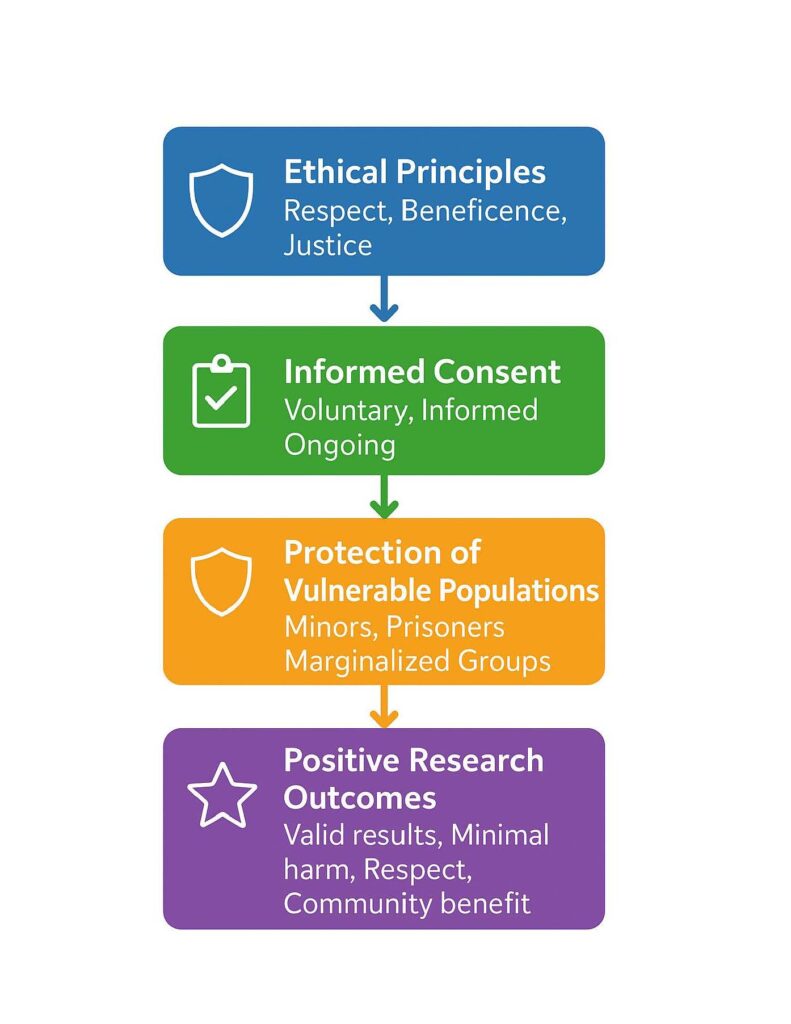
Ethical research is grounded in core principles such as respect for persons, beneficence, and justice, which guide all aspects of study design and conduct. These principles underpin the process of informed consent, ensuring that participants receive complete information, understand potential risks and benefits, and voluntarily agree to take part in the research. Special attention is given to vulnerable populations, such as children, prisoners, pregnant individuals, or those with cognitive impairments, to provide additional safeguards and prevent exploitation. When ethics are rigorously applied, research produces credible outcomes, ethically obtained and socially responsible, while protecting participant safety and maintaining public trust in the research process.
Key Takeaways
- Unethical human experimentation, such as Nazi medical experiments, led to the creation of modern ethical research standards.
- In Canada and among Indigenous peoples, unethical research has included culturally unsafe practices, a lack of consent, and exploitation. This history highlights the need for culturally respectful and community-engaged research practices.
- According to the Tri-Council Policy Statement, research involving human subjects must be guided by Respect for Persons, Concern for Welfare/Beneficence, and Justice.
- Informed consent must be free, informed, ongoing, and voluntary. Vulnerable populations require additional protections to avoid coercion or exploitation.
- Researchers must prioritize the confidentiality and anonymity of participants, as failure to protect privacy can result in emotional, social, or legal harm.
- Research Ethics Boards (REBs) review all studies involving human subjects before research begins and ensure risks are minimized, participants’ rights are upheld, and informed consent procedures are appropriate.
- Nurses must advocate for participants. According to the CNA code of Ethics, nurses must: promote informed decision-making, preserve dignity and confidentiality, promote justice, and act with accountability.

Ethics Teaching Tips for Novice Nursing Researchers from Dr. Florriann Fehr
Ethical research is essential to protect participants, ensure credible outcomes, and maintain public trust. As a novice researcher, here are key tips to guide your practice:
- Apply Core Ethics Principles
- Respect for persons, beneficence, and justice should guide all research decisions.
- Always ask: “Am I protecting participants’ rights and well-being?”
- Master Informed Consent
- Clearly explain purpose, procedures, risks, and benefits.
- Ensure participation is voluntary and understood.
- Remember: consent is ongoing, not a one-time form.
- Protect Vulnerable Populations
- Extra safeguards are required for children, cognitively impaired individuals, pregnant participants, or marginalized groups.
- Always consider power dynamics and equitable treatment.
- Use Real-Life Scenarios
- Analyze case studies from clinical practice.
- Discuss ethical dilemmas such as patient refusal of care, privacy breaches, or end-of-life decisions.
- Ask: “Which ethical principles are in play here?”
- Reflect Critically
- Keep a journal of ethical observations in research or clinical settings.
- Reflect on questions like: “Was the participant’s voice heard? Could harm have been minimized?”
- Cultivate Moral Courage
- Ethical research often requires speaking up when something seems wrong.
- Practice role-play to strengthen advocacy skills.
- Connect Ethics to Evidence-Based Practice
- Ethical care and research are mutually supportive.
- Ensure interventions and study designs align with best practices.
- Engage in Interdisciplinary Thinking
- Consider perspectives of colleagues, families, and participants.
- Ethical dilemmas often require team discussion and collaboration.
- Know the Rules
- Familiarize yourself with REB/IRB procedures, privacy laws, and professional codes (e.g., CNA Code of Ethics).
- Ethics is embedded in both policy and practice.
- Use Interactive Learning
- Participate in debates, polls, and discussions on ethical scenarios.
- Ask: “What would you do differently? Why?”
Knowledge Check
Media Attributions
- Core Components of Ethical Research Practice [flow diagram] is by Dr. Floriann Fehr, at Thompson Rivers University, and is subject to the CC BY NC SA license .
- Dr. Fehr [avatar] is by Research Assistant Katie Gregson on Canva using Canva AI image creation https://www.canva.com/ai-assistant/