The Role of Research in Nursing
You are a second-year nursing student living in residence. Between clinical shifts and study sessions, you rely heavily on the campus cafeteria for meals; cooking has never really been your thing. Looking for something different to do with your free time, you join a creative workshop where you’re challenged to research and prepare a culturally inspired dish.
You choose to make sushi, a well-known Japanese dish. However, to reflect your own Canadian context, you decide to swap the typical ingredients like tuna or crab with smoked Arctic char, a sustainably sourced fish from Canada’s North. You dive into your research, learning how to properly prepare the rice, handle raw fish safely, and present the dish with cultural sensitivity. The final product is a fusion of traditions— familiar, yet innovative. Your creativity and effort are recognized, and your dish earns top marks.
Although sushi isn’t new, your approach adds something original and meaningful. This is the heart of research: building on existing knowledge, asking questions, exploring alternatives, and creating new knowledge or insights that can be shared and applied.
In nursing, research follows a similar path. Nurses ask questions based on their observations and experience in clinical settings. They gather and evaluate evidence, reflect on patterns, and test ideas to improve patient care, health systems, and community outcomes. Whether through formal studies, quality improvement projects, or reflective inquiry, nursing research helps advance the profession and positively impacts lives.
You’ll find that nursing knowledge doesn’t come from one place. It grows out of practice, ethics, relationships, and critical thinking. Research provides the tools to make informed decisions, challenge outdated practices, and contribute to change.
Just as crafting your own version of sushi reflects creativity and curiosity, nursing research invites you to be curious, innovative, and purposeful in how you understand and improve the world around you.
What Does a Nurse Researcher Do?
Nurses are Researchers, we are Scientists of Health. We take part in the creation and participation of scientific studies to improve healthcare services and patient outcomes. All of our practice is evidence-informed or based. An area of study within healthcare depends on our specialization and where we work. Some Nurse Researchers study diseases and illnesses, while others may study clinical trials to oversee a new treatment method or medication. We all practice with inquiry and look to science for the best ways to care, this is Step Zero!. The spirit of inquiry is part of the nursing role, we always look for ways to help healing be better, based on curious rigour!
Formal Nurse Researchers, who actively conduct research, are also responsible for finding subjects who are best suited to participate in their studies using strict ethical research principles. Upon completion of a research study, data findings are compiled into a report to share with their immediate supervisors and granting agencies. Eventually, their research findings may also circulate to the larger healthcare community and public.
The Nurse’s Role in Research
Nurses play a vital role in advancing knowledge and improving patient care through their involvement in research. Their role can be understood in several key ways:
-
Consumer of Research
Nurses regularly use research findings to inform their practice. As consumers of research, they critically evaluate evidence, apply best practices, and integrate new knowledge into patient care. This supports evidence-based nursing and ensures that care is safe, effective, and up to date. -
Generator of Clinical Questions
Through daily interactions with patients and healthcare systems, nurses are in a unique position to identify gaps in care or areas for improvement. They generate clinical questions based on observations, challenges, or inconsistencies in practice, which can lead to meaningful research and quality improvement initiatives. -
Investigator or Participant in Research
Nurses may take on active roles in conducting research, such as designing studies, collecting data, or analyzing results. Even when not leading studies, they often participate by recruiting participants, implementing interventions, or supporting research teams in clinical settings. -
Protector of Research Participants
Nurses have an ethical responsibility to safeguard the rights, dignity, and well-being of individuals involved in research. This includes ensuring informed consent, maintaining confidentiality, and advocating for participants if concerns arise. Their role is critical in upholding ethical standards in all research activities.
Activity
Watch this video Judy Duchscher Interview Part 1 [1:45] on YouTube, by Dr. Florriann Fehr, in which Judy explains why she does research.
 Note: If you are using a printed copy of this resource, watch the video by scanning the QR code with your mobile device.
Dr Fehr Tip: Common Sense Isn’t Evidence
If you ever hear someone say, “We’ve always done it this way,” I want your curiosity to gently wake up.
Nursing has traditions. Some are beautiful and foundational. Others need updating. Research is not about disrespecting experience, it’s about strengthening it.
As a student, you are allowed to wonder:
Why do we do this intervention?
What evidence supports it?
Has anything changed?
Curiosity is not criticism. It is professional growth.
Remixed from:
- An Introduction to Research Methods for Undergraduate Health Profession Students by Faith Alele and Bunmi Malau-Aduli (2023) published by pressbooks under a CC BY-NC 4.0 license.
Media Attributions
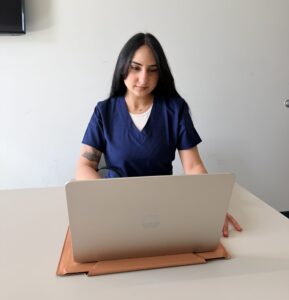
- Figure 1.1 Nurses use research and clinical data to guide evidence-based practice is by Resarch Assistant Ime Stavinga and is subject to the CC BY-NC-SA 4.0 license.
- Dr. Fehr avatar by Research Assistant Katie Gregson on Canva using Canva AI image creation https://www.canva.com/ai-assistant/ is subject to the Canva Pro Content License.
Reference
Alele, F., & Malau-Aduli, B. (2023). An introduction to research methods for undergraduate health profession students. James Cook University. https://jcu.pressbooks.pub/intro-res-methods-health/
Fehr F., & Duchscher J. (2022, October 2). Judy Duchscher Interview Part 1 [Video]. https://www.youtube.com/watch?v=GeLkgZXm3zo
Intellectual property of Dr. Florriann Fehr/TRU Open Press CC BY-NC-SA 4.0