
Data Collection Methods
Selecting an appropriate data collection method is a key step in qualitative research. The richness and credibility of qualitative data depend heavily on the skill of the researcher, especially their ability to listen actively, interpret subtle cues, and build rapport. In health research, the most common approaches include interviews, focus groups, and observations.
Interviews
Interviews are used to explore participants’ experiences, beliefs, and perspectives in depth. They may be conducted face-to-face, by phone, or online, depending on what is most accessible and comfortable for participants.
There are three main interview types:
Structured interviews
These follow a fixed set of questions delivered in the same order to every participant. They are efficient and useful when specific information is required, but they allow little room for elaboration and offer limited depth.
Semi-structured interviews
This format uses a guiding list of topics or questions while allowing flexibility to ask follow-up questions or explore emerging ideas. Semi-structured interviews are the most common in nursing and health research because they provide both structure and openness.
Unstructured interviews
These unfold like natural conversations, beginning with a broad question such as “Tell me about your experience with…”. They allow for deep exploration when little is known about a topic but can be lengthy and require strong interviewing skills.
Advantages and Disadvantages
Interviews offer flexibility and allow participants to share their stories in their own words. They reduce the influence of others’ opinions, provide opportunities to observe non-verbal communication, and often encourage honest reflection. However, they can be time-consuming to schedule, conduct, and analyze, and participants may feel less anonymous, which can influence disclosure.
Despite these challenges, interviews remain one of the most powerful methods for uncovering the meaning and complexity of human experiences in nursing and health care.
Focus Groups
Focus groups are a qualitative data collection method that brings together a small group of participants to discuss a specific topic, issue, or shared experience. They are designed to explore not only what participants think but also how and why they think that way. Typically, a focus group includes six to eight participants and is guided by a trained moderator who uses a structured topic guide to facilitate discussion. Sessions may be audio-recorded or video-recorded and later transcribed, and an additional observer may take notes on non-verbal communication and group interactions.
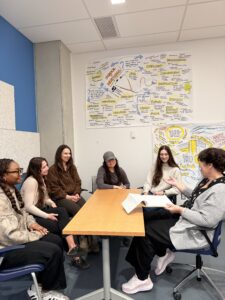
Advantages and Disadvantages
Focus groups are effective for gathering a wide range of perspectives from individuals who share similar experiences or expertise. They provide insight into group dynamics, collective attitudes, and how participants influence each other’s views. This makes them particularly valuable for exploring perceptions, beliefs, and social processes.
However, focus groups also come with limitations. Individual participation is often lower than in one-on-one interviews, and moderators must have experience managing group dynamics. Sensitive or personal topics may be more difficult to discuss in a group setting, and some participants may feel hesitant to speak openly. Groupthink, dominant voices, and social pressure can influence discussions, reducing the diversity of perspectives shared. These challenges require careful facilitation to ensure all participants feel comfortable contributing.
Observation
Observation involves watching and documenting the behaviours, interactions, and activities of individuals or groups as they naturally occur in their usual environment. This method is particularly valuable in healthcare research because it allows the researcher to see real-world practices as they unfold, rather than relying solely on participants’ recollections or interpretations.
Observations can be participant or non-participant. In participant observation, the researcher is directly involved in the setting being studied, such as a nurse who is also working on the unit while observing team communication. In non-participant observation, the researcher remains separate from the activity and observes without taking part, attempting to minimise their influence on the environment. During either type of observation, the researcher may document everything they see or focus on specific behaviours, such as nurse-patient communication, interprofessional teamwork, or workflow patterns.

Observation allows researchers to study behaviors and interactions in context.
What questions does this raise about privacy and ethics as discussed in Chapter 3?
Advantages and disadvantages
One advantage of observation is that it reduces the distance between the researcher and the real-world context. It can reveal important issues, behaviours, or interactions that participants themselves may not recognise or be able to articulate. Observation is especially useful when studying routine practices, environmental influences, or complex clinical processes.
However, this approach can be time-consuming because it may require prolonged periods of watching and documenting interactions to obtain rich and meaningful data. Observations can also be influenced by the researcher’s own assumptions or interpretations, which may affect the accuracy and credibility of the findings. This makes reflexivity and careful note-taking essential throughout the process.
Activities
First watch the video Demo Qualitative Interview With Mistakes [6:28], by Joanna Chrzanowska (2014), on YouTube.
 Note: If you are using a printed copy of this resource, watch the video by scanning the QR code with your mobile device.
What mistakes did you notice? Try this short quiz and check your answers!
Now lets take a look at how it can be done correctly by watching the video Demonstration Qualitative Interview – how it should be done [14:00] by Joanna Chrzanowska (2014), on YouTube.
 Note: If you are using a printed copy of this resource, watch the video by scanning the QR code with your mobile device.
Activity
Watch the video, Ethical Data Collection with Focus Group Example [9:19] on YouTube, by research assistant Ime Stavinga and Dr. Florriann Fehr.
 Note: If you are using a printed copy of this resource, watch the video by scanning the QR code with your mobile device.
 This section applies to qualitative, quantitative, and mixed-methods data collection!
Digitalization of Data Collection
Digitization of data is when data is placed into a digital format. This could include transfer of images, documents, audio recordings, and any range of results. Instead of keeping hard copies the information can be more easily store large amounts of information and also help with preserving data that might be fragile or easily lost. Access to this data can be more widely shared among research teams. Ownership and control over digitalized data is an important consideration and protocols for accessing digital data is essential and protects individual and community rights. For example, some items such as photographs or sacred cultural items may breach Indigenous, religious, or cultural protocols. Researchers need to ask:
1) Who has access to the data?
2) Are links to the data open to other sources?
3) Are the links at risk to being deleted (especially if part of a longitudinal study and needing to be used in the far future)?
4) Have the participants in the study (or community) given permission for digitization?
5) Is the data at any risk of ethical breach related to being digitalized?
Cloud-based data storage can be accessed all over the world and involves multiple servers and could pose data breach security risks (especially public clouds-that are free or low cost) and data ownership or control issues. However, for massive amounts of data, this allows quick transfer of data and valuable low-cost options for collaborative research. Most researchers prefer private clouds, supported by their organizations, where the data is stored and backed up with security measures in place. Cloud-based service providers have sometimes confusing or long-worded Terms of Agreement. Researchers using cloud-based data storage should be careful to respect what data is uploaded into such data-storage and ensure participants have consent to such storage.
Research Data Management (RDM)
An RDM plan must be in place before data is collected. This involves the active organization of how research data is used, accessed and stored. Researchers ensure that there is a strong standard of practice that follows their ethical policies, uses safe data management infrastructure and safe technologies. RDM activities are used to keep participants safe and used uniquely with each research project; however clearly outlined in design in order to be replicated. Respectful and effective RDM requires clear communication should keep the participant’s rights in mind.
Access to Open Networks and Open Data
The world is moving into an increasingly open data environment. Some data is free and open to anyone without restrictions to copy right or patents. Sharing of scientific studies offers transparent research processes to anyone wanting to replicate the work. Academic organizations are supportive of open access to education (such as this open access education material). Open access is beneficial but ethically requires consent and credit to the owners of the information. This is the same with data, when openly shared the participants in the study need to consent to open access of study findings and be fully engaged in the methods of the research sharing. Researchers need to ask themselves; do they have the authority or consent to make the research data open and how do participants have decision-making in the process? For information on indigenous sovereignty movements that are specifically interested in decision-making rights to data, take time to read about the Global Indigenous Data Alliance (GIDA). The GIDA network is advocates for putting people and their communities first related to data collection and ethical research practices. The rights and wellbeing of participants’ should be a researcher’s concern at all stages of the research process.
Reflection Questions
Is it acceptable to have data digitizable, so there are no limits to preservation?
How can a researcher ensure they are reflecting the ethical principles of research when suing a cloud-based service provider?
Remixed from:
- An Introduction to Research Methods for Undergraduate Health Profession Students by Bunmi Malau-Aduli and Faith Alele (2023), James Cook University, published under a CC BY NC 4.0 license.
Media Attributions
- Figure 7.2 Observational research is by Ime Stavinga and is subject to the CC BY-NC-SA 4.0 license.
- Figure 7.1 Focus groups allow researchers to explore shared experiences and perspectives is by Resarch Assistant Ime Stavinga and is subject to the CC BY-NC-SA 4.0 license.
- Katie [avatar] by Research Assistant Katie Gregson on Canva using Canva AI image creation https://www.canva.com/ai-assistant/ is subject to the Canva Pro Content License.
References
Alele, F., & Malau-Aduli, B. (2023). An Introduction to Research Methods for Undergraduate Health Profession Students. James Cook University. https://jcu.pressbooks.pub/intro-res-methods-health/part/4-qualitative-research/
Chrzanowska, J. (2014a, July 9). Demo qualitative interview with mistakes [Video]. YouTube. https://www.youtube.com/watch?v=U4UKwd0KExc
Chrzanowska, J. (2014b, July 9). Demonstration qualitative interview – how it should be done [Video]. YouTube. https://www.youtube.com/watch?v=eNMTJTnrTQQ
Global Indigenous Data Alliance. (n.d.). Global Indigenous Data Alliance. https://www.gida-global.org/
Fehr, F. & Stavinga, I. (2026, March 14). Ethical data collection with focus group example [Video]. YouTube. https://www.youtube.com/watch?v=efYbniqwh08